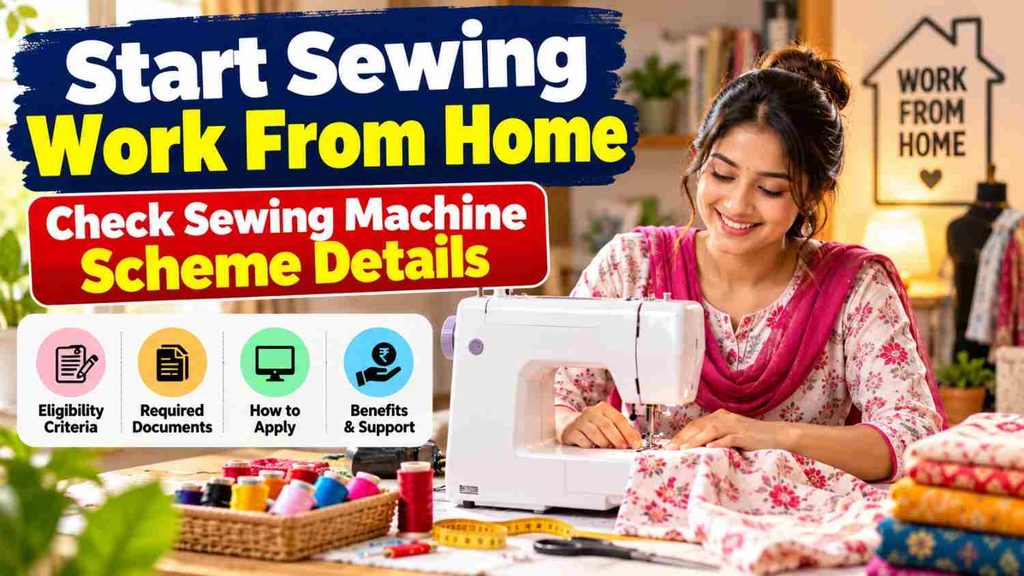
Start Sewing Work From Home – Check Sewing Machine Scheme Details
Starting sewing work from home can be a practical way to build a small income source with limited investment. If you already know basic stitching or want to learn tailoring, a sewing machine can help you offer services such as blouse stitching, kurti stitching, alterations, school uniforms, fall-pico, kidswear, and simple boutique work.
Many people also search for Sewing Machine Scheme, Silai Machine Yojana, Free Sewing Machine Scheme, Tailoring Scheme for Women, and Sewing Machine Assistance to find out whether any government-supported program can help with training, tools, equipment, or self-employment support.
However, the benefits and eligibility rules may vary depending on the state, department, labour board, welfare program, or skill development scheme. Some programs may offer a sewing machine or tailoring toolkit, while others may provide training, subsidy, financial assistance, or skill certification.
This guide explains how to start sewing work from home, what sewing machine schemes may offer, who may be eligible, which documents can be required, and how to apply safely.
Sewing Machine Scheme – Quick Overview
| Details | Information |
|---|---|
| Scheme Category | Women Welfare / Skill Development / Self-Employment |
| Main Purpose | Support Tailoring Skills and Home-Based Work |
| Possible Beneficiaries | Eligible Women, Workers and Low-Income Applicants |
| Possible Benefits | Sewing Machine, Toolkit, Training or Financial Assistance |
| Application Mode | Online or Offline |
| Eligibility | Depends on State and Scheme Rules |
| Common Documents | Aadhaar, Income Proof, Address Proof, Bank Details |
| Selection Process | Eligibility and Document Verification |
| Work Opportunity | Tailoring, Alteration, Boutique and Stitching |
| Official Source | Concerned Government Department |
Why Sewing Work From Home Can Be a Good Option
Home-based sewing can be suitable for people who want flexible working hours and do not want to invest heavily in a shop or commercial setup.
With a sewing machine and basic tailoring skills, you can start with simple services and gradually increase your work as your experience improves.
A home tailoring business may also allow you to work according to your own schedule and accept orders based on your available time.
What Is the Sewing Machine Scheme?
The term Sewing Machine Scheme is commonly used for different welfare and skill development programs connected with tailoring and self-employment.
These programs may be introduced by state departments, labour welfare boards, women development departments, social welfare authorities, or skill development agencies.
Depending on the scheme, applicants may receive support such as:
- Sewing machine assistance
- Tailoring toolkit
- Skill training
- Stitching course
- Certification
- Financial assistance
- Equipment subsidy
- Self-employment support
It is important to check the official notification because not every scheme provides a completely free sewing machine.
Who May Be Eligible for Sewing Machine Assistance?
Eligibility rules are not the same everywhere.
Common conditions may include:
- Applicant should be an Indian citizen.
- Applicant may need to be a resident of the concerned state.
- Women-specific schemes may be available only for female applicants.
- Applicants may need to meet a prescribed age limit.
- Family income may need to remain below a specified level.
- Labour-related schemes may require worker registration.
- Some programs may focus on economically weaker applicants.
- Widows, differently-abled women, or other eligible groups may receive priority in certain schemes.
- The applicant may need to confirm that the same benefit has not been received earlier.
Always verify eligibility before submitting the form.
Documents That May Be Required
The exact document list depends on the scheme, but applicants may commonly need the following:
| Document | Purpose |
|---|---|
| Aadhaar Card | Identity Verification |
| Voter ID / Other ID | Additional Identity Proof |
| Residence Certificate | Address Verification |
| Income Certificate | Financial Eligibility |
| Bank Passbook | Benefit Transfer |
| Passport Size Photograph | Application Form |
| Mobile Number | OTP and Updates |
| Ration Card | Family Information |
| Category Certificate | If Applicable |
| Worker Registration Card | Labour Scheme Requirement |
| Widow Certificate | If Applicable |
| Disability Certificate | If Applicable |
Make sure that the information on your documents matches the application form.
How to Apply for a Sewing Machine Scheme
If an online application facility is available, the general process may look like this:
Step 1: Find the Official Portal
Visit the official website of the concerned department.
The scheme may be available through:
- Labour Department
- Women and Child Development Department
- Social Welfare Department
- Skill Development Department
- Rural Development Department
- State Welfare Board
Avoid random websites claiming guaranteed approval.
Step 2: Search for the Relevant Scheme
Use keywords such as:
- Sewing Machine Scheme
- Tailoring Assistance
- Women Self-Employment Scheme
- Tailoring Training
- Skill Development Program
- Labour Welfare Benefit
Read the scheme details carefully.
Step 3: Check Eligibility
Before registering, check:
- Age criteria
- Income limit
- State residency requirement
- Category conditions
- Required documents
- Application dates
- Benefit type
This can reduce the chances of rejection.
Step 4: Complete Registration
You may need to provide your name, mobile number, Aadhaar details, date of birth, state, and district.
An OTP may be sent for verification.
Step 5: Fill the Application Form
Enter all requested details carefully, including:
- Full name
- Address
- Date of birth
- Family information
- Income details
- Occupation
- Bank details
- Category
Avoid spelling mistakes and incorrect information.
Step 6: Upload Documents
Upload clear copies of the requested documents.
Check file format, size, readability, and validity before submitting.
Step 7: Review and Submit
Check the complete form before final submission.
Save your application number or acknowledgement receipt after submitting the form.
What Sewing Work Can You Start From Home?
There are several services you can offer from home.
Blouse Stitching
Blouse stitching is a common tailoring service and may have regular local demand.
Kurti and Suit Stitching
You can take custom orders for kurtis, salwar suits, and basic women’s clothing.
Alteration Work
Alteration is often easier for beginners.
Services may include:
- Pant shortening
- Waist adjustment
- Sleeve adjustment
- Zip replacement
- Clothing repair
School Uniform Stitching
School uniforms may provide bulk orders during admission seasons.
Saree Fall and Pico
This is another simple service that can generate regular small orders.
Kidswear
As your skill improves, you can start stitching children’s clothing and simple dresses.
Curtains and Cushion Covers
Home furnishing stitching can also be added as an extra service.
How Much Can You Earn From Home Sewing?
There is no fixed income from tailoring.
Earnings depend on several factors:
- Your skill level
- Number of customers
- Location
- Type of stitching
- Local pricing
- Delivery speed
- Seasonal demand
- Quality of finishing
A beginner may start with basic alteration and gradually move into higher-value custom stitching.
Wedding, festival, and school seasons may create higher demand for tailoring services.
How to Get Customers for Home Tailoring
Getting customers is just as important as learning stitching.
You can start by telling:
- Neighbours
- Friends
- Relatives
- Local women’s groups
- Existing community contacts
You can also use WhatsApp to show completed work, share pricing, and take local orders.
Good stitching quality and timely delivery can help generate repeat customers and referrals.
How to Make Your Sewing Work More Profitable
A few practical steps can help improve your home tailoring business:
Start With Simple Services
Begin with services you can complete confidently.
Keep Pricing Clear
Maintain a simple price list for stitching and alterations.
Deliver on Time
Customers are more likely to return when orders are delivered on schedule.
Improve Your Skills
Learn new patterns, measurements, cutting techniques, and finishing methods.
Maintain Quality
Clean stitching and proper fitting can help build trust.
Track Expenses
Keep a simple record of thread, electricity, machine maintenance, and other costs.
What Benefits Can a Sewing Machine Scheme Provide?
Depending on the program, benefits may include:
- Sewing machine
- Tailoring toolkit
- Training
- Certificate
- Financial assistance
- Equipment subsidy
- Self-employment support
- Entrepreneurship guidance
Do not assume that every scheme offers the same benefit.
How to Check Application Status
If the scheme has an online portal, you may be able to track your application using:
- Application number
- Registered mobile number
- Aadhaar number
- Login credentials
Common statuses include:
- Submitted
- Under Verification
- Approved
- Rejected
- Benefit Processing
- Distribution Pending
Keep your acknowledgement receipt safe until the process is complete.
Common Reasons for Application Rejection
Applications may be rejected because of:
- Missing documents
- Incorrect personal information
- Invalid income certificate
- Wrong bank details
- Duplicate application
- Ineligible age
- Incorrect domicile information
- Expired certificates
- Blurry uploads
- Failure to meet scheme criteria
Reviewing the form carefully before submission can help avoid many of these problems.
Stay Safe From Fake Sewing Machine Offers
People searching for free sewing machine schemes may encounter misleading websites or messages.
Follow these precautions:
- Use only official government portals.
- Never share bank OTPs.
- Do not share ATM PINs or passwords.
- Avoid guaranteed approval claims.
- Verify any application fee.
- Do not pay unknown agents.
- Check the department name carefully.
- Save your official acknowledgement receipt.
Frequently Asked Questions – FAQ
1. Can I start sewing work from home with one machine?
Yes. Many people begin with one sewing machine and basic services such as alterations, blouse stitching, and clothing repair.
2. Is there a government Sewing Machine Scheme?
Different states and departments may run tailoring, skill development, labour welfare, or self-employment programs. Availability and benefits vary.
3. Does every Sewing Machine Scheme provide a free machine?
No. Some schemes may provide a sewing machine, while others may offer a toolkit, training, subsidy, or financial assistance.
4. Who can apply?
Eligibility depends on the scheme and may include age, income, residence, gender, category, or worker registration conditions.
5. Can I apply online?
Yes, if the concerned scheme provides an online application facility.
6. What documents are usually required?
Common documents may include Aadhaar, address proof, income certificate, bank passbook, photograph, and mobile number.
7. How can I check application status?
Use the official portal and enter the application number, registered mobile number, or other requested details.
8. Can beginners start tailoring from home?
Yes. Beginners can start with simple repairs and alterations while improving their stitching skills.
9. How can I increase my tailoring income?
Improve your skill, offer more services, maintain good quality, deliver on time, and build repeat customers.
10. Is sewing work suitable for long-term self-employment?
It can be. Demand depends on location, skill, pricing, customer service, and the range of services offered.
Conclusion
Starting sewing work from home can be a practical self-employment option for people who want to use tailoring skills to build an additional source of income. With a sewing machine, basic training, and regular customers, you can begin with simple alterations and gradually move into custom stitching, uniforms, boutique work, and other higher-value services.
At the same time, eligible applicants can check whether a Sewing Machine Scheme or related skill development program is available in their state. Depending on the scheme, support may include equipment, a toolkit, training, financial assistance, or other self-employment benefits.
Before applying, always verify the scheme through the concerned official department, check eligibility carefully, prepare the correct documents, and avoid unofficial websites making guaranteed benefit claims.